
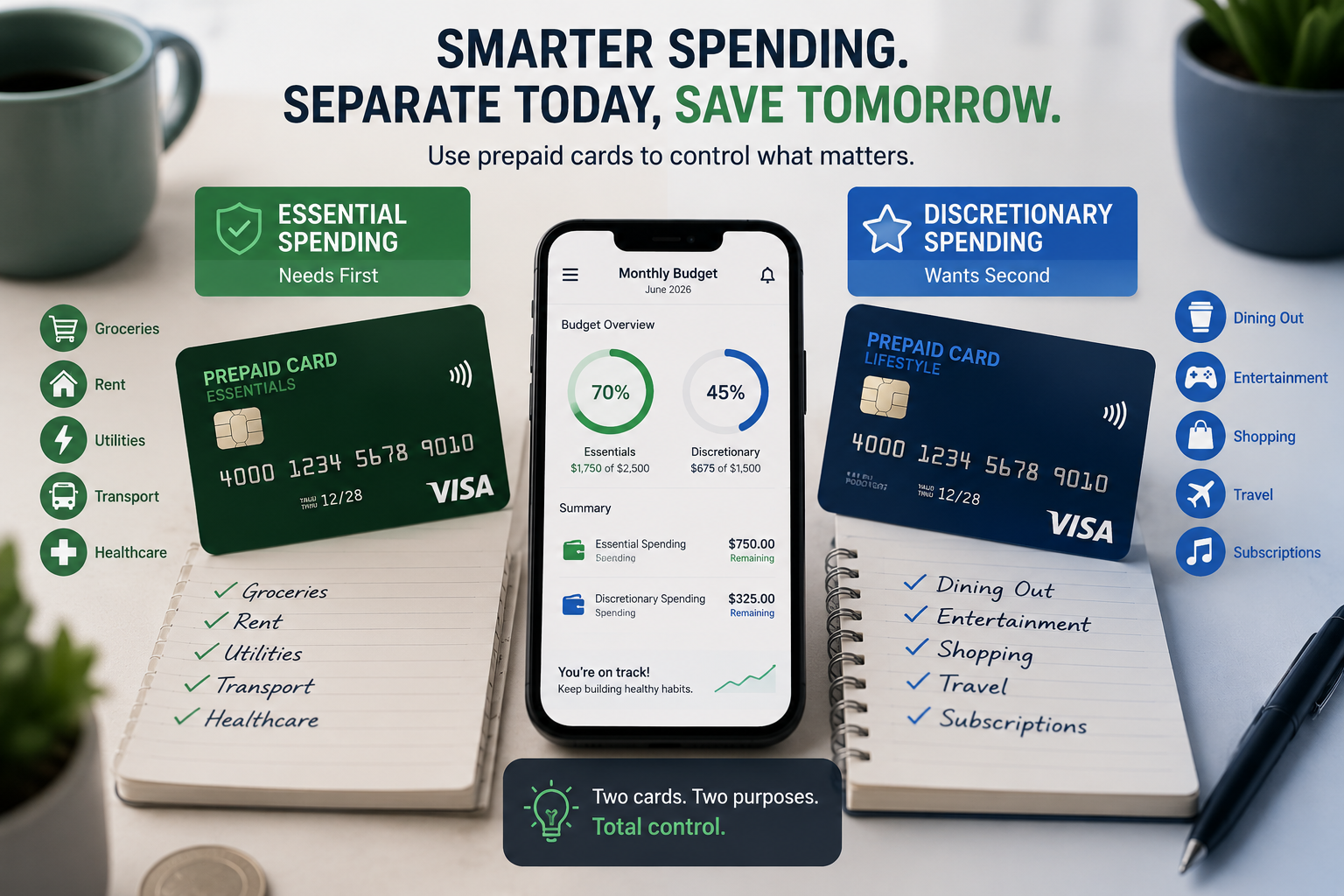
Managing personal finances has become more challenging as everyday expenses continue to evolve. Rising living costs, subscription services, online shopping, and digital payments make it easier than ever to lose track of where money goes each month. To regain control, many consumers are adopting a surprisingly simple strategy: using prepaid cards to separate essential expenses from discretionary spending.
Rather than relying on a single debit or credit card for every purchase, people are assigning different prepaid cards to different spending categories. This method creates clearer financial boundaries, reduces impulsive purchases, and makes monthly budgeting much easier to maintain.
Understanding Two Different Types of Spending
Financial experts generally divide personal expenses into two categories. Essential spending includes costs that are necessary for everyday life, such as:
- Rent or mortgage payments
- Groceries
- Utility bills
- Transportation
- Insurance
- Healthcare
- Education
Discretionary spending covers purchases that improve lifestyle but are not essential, including:
- Dining out
- Entertainment
- Streaming subscriptions
- Shopping
- Gaming
- Travel
- Hobbies
When both categories share the same payment method, it becomes difficult to understand where money is actually being spent.
Why Prepaid Cards Fit This Strategy
Prepaid cards naturally encourage spending discipline because users can only spend the balance that has already been loaded onto the card.
Many consumers now dedicate one prepaid card exclusively to essential expenses while using another for leisure spending. Once the discretionary balance reaches zero, entertainment spending automatically stops until the next budgeting period. This creates clear financial boundaries without relying entirely on willpower.
Reducing Impulse Purchases
Impulse spending remains one of the biggest challenges in personal finance.
A prepaid card with a fixed entertainment budget introduces a natural pause before making unnecessary purchases. Instead of drawing from a shared account with available funds, users immediately see whether their allocated budget still allows the purchase. This small psychological barrier often prevents overspending without creating unnecessary restrictions.
Creating Better Monthly Habits
Budgeting becomes significantly easier when every expense already belongs to a predefined category. Consumers no longer need to review dozens of mixed transactions at the end of the month because spending has already been separated throughout the budgeting process.
Many people find that this approach helps them:
- Stay within monthly limits
- Identify unnecessary expenses
- Build emergency savings
- Reduce financial stress
- Plan future purchases more effectively
The budgeting process shifts from correcting mistakes afterward to making smarter decisions from the beginning.
Supporting Digital Budgeting Apps
Modern financial apps work especially well alongside prepaid cards.
Many users connect each prepaid card to budgeting software, allowing them to monitor separate spending categories in real time. Notifications, balance tracking, and transaction histories provide an instant overview of how much remains available for each part of the monthly budget. Instead of relying on spreadsheets, consumers receive automatic insights as they spend.
Helping Families Manage Shared Expenses
Households are also discovering the advantages of category-based prepaid cards.
Parents may keep one prepaid card for groceries, another for children’s activities, and a separate card for family entertainment. This makes household budgeting more transparent while helping every family member understand spending priorities. Shared financial planning becomes easier because each category has its own clearly defined limit.
Encouraging More Conscious Spending
Separating spending categories changes how consumers think about purchases.
Instead of asking whether they have enough money overall, people begin asking whether a purchase fits within its intended budget. This subtle shift encourages more deliberate financial decisions and reduces emotional spending. Over time, these habits often lead to stronger long-term money management skills.
Adapting to Rising Living Costs
Inflation has encouraged many households to reassess how they allocate monthly income.
Using prepaid cards for essential and discretionary expenses makes it easier to protect critical household costs even when prices increase unexpectedly. Essential expenses remain funded first, while optional spending adjusts naturally according to the remaining budget. This flexible approach allows consumers to adapt without abandoning their financial plans.
The Future of Category-Based Spending
As digital banking continues evolving, prepaid cards are becoming more than simple payment tools. They are increasingly part of broader financial wellness strategies that emphasize organization, transparency, and intentional spending.
Future platforms may automatically recommend spending allocations, adjust budgets based on income patterns, or create virtual prepaid cards for individual categories, making financial management even more personalized.
Final Thoughts
Separating essential and discretionary spending with prepaid cards is helping consumers build healthier financial habits in an increasingly digital economy. By assigning dedicated budgets to different types of expenses, users gain greater visibility, reduce unnecessary purchases, and create a more structured approach to everyday money management. As personal finance continues shifting toward smarter digital tools, category-based prepaid spending is likely to become an increasingly common budgeting strategy.