
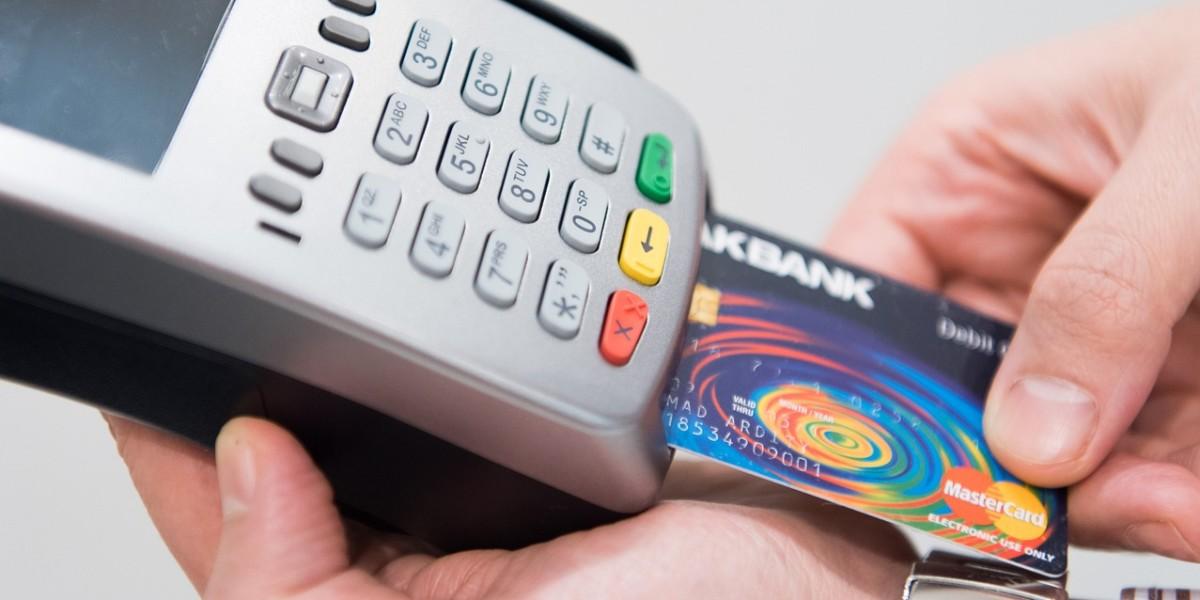
A prepaid card can carry a Visa or Mastercard logo, but that does not mean Visa or Mastercard holds the money loaded onto the card. The logo identifies the payment network that helps connect the card, merchant and financial institutions when a transaction takes place. This distinction becomes easier to understand when a prepaid program changes from one network to another while the underlying customer account or balance continues to work in largely the same way.
A current example appeared in September 2026, when Wealthsimple began moving customers from its prepaid Mastercard to a Visa Platinum Prepaid card. Wealthsimple described much of the switch as a behind-the-scenes change, with everyday spending continuing while customers received new card credentials and access to some different features. The change provides a useful example of what Visa and Mastercard actually do within a prepaid product and what consumers may notice when the network changes.
The Payment Network Is Only One Part of a Prepaid Card
A prepaid card involves several different organizations and systems working together. The company whose brand appears most prominently on the card may operate the program, another financial institution may issue it, and Visa or Mastercard can provide the network through which eligible transactions are processed.
This is why two prepaid cards carrying the Visa logo can have completely different fees, balance limits and support policies. The same applies to two Mastercard prepaid products. Those product-level rules are generally determined by the program and issuer rather than by the payment network alone.
A simple way to separate the roles is to look at them individually.
| Part of the prepaid card | Main role |
|---|---|
| Card program | Defines the product and customer experience |
| Issuer | Issues the card and handles regulated financial functions |
| Payment network | Routes eligible transactions between participants |
| Merchant/acquirer | Accepts and processes the payment |
| Prepaid balance | Determines how much money is available to spend |
Understanding these layers helps explain why changing the network logo does not necessarily transform the entire prepaid product.
What Happens When Mastercard Changes to Visa?
A network migration normally requires a new physical or digital card because Visa and Mastercard cards use different card credentials. In Wealthsimple’s current transition, customers moving to Visa receive a new card number, expiry date and CVV. Existing Mastercard details therefore cannot simply become Visa details while remaining identical.
That can create a small amount of practical work for the cardholder. If the old prepaid card was saved with an online retailer or another service, the replacement details may need to be added. A card stored in a digital wallet may also need to be updated according to the instructions provided by the issuer.
The important point is that a change in card credentials is different from losing the underlying funds. A program can move to another network while keeping the broader customer relationship and account intact.
Everyday Purchases May Feel Almost Identical
From the consumer’s perspective, the most noticeable feature of both networks is broad merchant acceptance. A user presents a prepaid card at a supported checkout, the merchant sends the transaction through the relevant network, and the available prepaid balance is used to cover an approved purchase.
This means a customer moving between major card networks may find that ordinary spending feels very similar. The card still needs sufficient funds, the merchant still needs to accept the relevant network and the transaction still needs to satisfy the card program’s rules.
OneVanilla provides a useful illustration because its current Canadian offering includes prepaid products operating on both networks. The site states that Vanilla Prepaid Cards can be used where the corresponding Visa or Mastercard prepaid cards are accepted. For a shopper, therefore, the network logo is important, but it is not the only factor determining whether a purchase will work.
Some Card Details Will Definitely Change
A new payment network usually means new payment credentials. This matters most when a prepaid card has already been connected to other services.
Cardholders should pay attention to several details when receiving a replacement:
- card number;
- expiry date;
- CVV or security code;
- digital wallet registration;
- saved merchant payment details;
- activation requirements.
A person who uses the card only by physically tapping or inserting it at stores may notice relatively little after activation. Someone who has saved the card with several online merchants may need to spend more time updating those details.
This is one reason consumers should read the migration instructions supplied by their own card provider rather than assuming every network switch follows exactly the same process.
Visa and Mastercard Do Not Set Every Card Feature
It is easy to attribute every feature on a card to the network logo. In reality, many important characteristics belong to the individual prepaid program. Fees provide a good example. A Visa prepaid card from one provider can have a different fee structure from another Visa prepaid card. A Mastercard product can likewise have its own activation, ATM or foreign-exchange rules depending on how the program is designed.
The same distinction applies to balance limits, reloadability and support.
| Feature | Usually depends mainly on |
|---|---|
| Merchant network | Visa or Mastercard |
| Available balance | Prepaid account |
| Reload options | Card program |
| Card fees | Program/issuer |
| Customer support | Program/issuer |
| ATM rules | Program plus network arrangements |
| Rewards or benefits | Individual product |
| Replacement policy | Program/issuer |
For this reason, comparing prepaid cards only by looking at Visa versus Mastercard can miss the features that actually have the greatest impact on day-to-day use.
A Network Change Can Still Bring New Features
Although much of a migration can happen behind the scenes, changing networks can also allow a card provider to modify features or benefits. Wealthsimple says its 2026 transition preserves features such as ATM fee reimbursement and no foreign-exchange fees while introducing other changes associated with the new Visa card. The company is moving customers in phases rather than switching every account simultaneously.
That example shows why consumers should distinguish between changes caused directly by the network and changes introduced by the provider at the same time. A company may use a network migration as an opportunity to redesign a product, but that does not mean every Visa or Mastercard prepaid card automatically includes those same features. The card agreement remains the better source for product-specific information.
What About Digital Wallets?
The connection between prepaid cards and digital wallets continues to grow. The broader prepaid market is increasingly integrating cards with mobile payment systems, while tokenization and biometric authentication are becoming more common across digital payments. An April 2026 market report highlighted mobile-wallet integration, contactless prepaid cards and tokenization among important developments in the prepaid sector. However, wallet compatibility should still be checked for the individual card rather than assumed from the network logo.
A particular Visa prepaid product may support a wallet while another Visa product does not. The same principle applies to Mastercard. Eligibility depends on the issuer, card program, market and wallet arrangement in addition to the payment network itself. If a replacement card receives a new number, users should also follow their provider’s instructions for adding or updating it in an eligible wallet.
Why Payment Networks Matter Even When Users Barely Notice Them
Payment networks are most successful when ordinary purchases feel uncomplicated. The customer taps a card, sees an approval and continues with the purchase without thinking about how the transaction travelled between different systems.
Behind that simple interaction, the network helps route authorization messages between the merchant side and the institution responsible for the card. It provides standards that allow a card issued by one organization to work across a large number of participating merchants.
That reach is one of the key differences between an open-loop prepaid card and a store-specific product. The network creates broad acceptance, while the individual prepaid program determines many of the conditions under which the card can be used. Visa and Mastercard therefore matter greatly to the infrastructure even if the consumer rarely needs to think about them during a normal purchase.
What Should Cardholders Check After a Network Change?
When a prepaid provider announces a move from one network to another, the best approach is to focus on concrete changes rather than the logo alone. Start with the information supplied by the card provider and check whether a new card needs activation, when the old card stops working and whether any saved payment details need updating.
It is also worth reviewing the new product terms. Look at fees, ATM access, foreign transaction rules, digital-wallet eligibility and any benefits that may have changed. If the prepaid balance remains connected to the same underlying account, confirm how and when it becomes available through the replacement card.
Most importantly, do not assume that a message requesting new card information is legitimate simply because a genuine migration is underway. Use the provider’s official app, website or support information when checking instructions rather than following unexpected links asking for sensitive credentials.
Visa vs Mastercard Is Only Part of the Comparison
The growth of prepaid payments makes these distinctions increasingly useful. Research published in 2026 estimated the global prepaid card market at $3.4 trillion in 2025 and projected continued expansion through 2035, supported by cashless payments, ecommerce and further integration with digital payment technology.
As the market develops, consumers are likely to encounter more prepaid products connected with apps, wallets and broader financial services. Javelin’s 2026 prepaid research similarly points to continued growth across several prepaid categories and increasing connections between cards and wider consumer payment relationships.
That makes it useful to understand what the logo on the front of a card actually represents. Visa and Mastercard provide important payment networks, but they do not independently define every characteristic of the prepaid product carrying their brands.
When a prepaid card switches from one network to another, the plastic and card credentials may change while much of the underlying experience remains familiar. The details that matter most are the new card information, acceptance, fees, wallet compatibility and rules set by the specific program. Looking at those factors provides a much clearer comparison than simply asking whether Visa or Mastercard is better.