
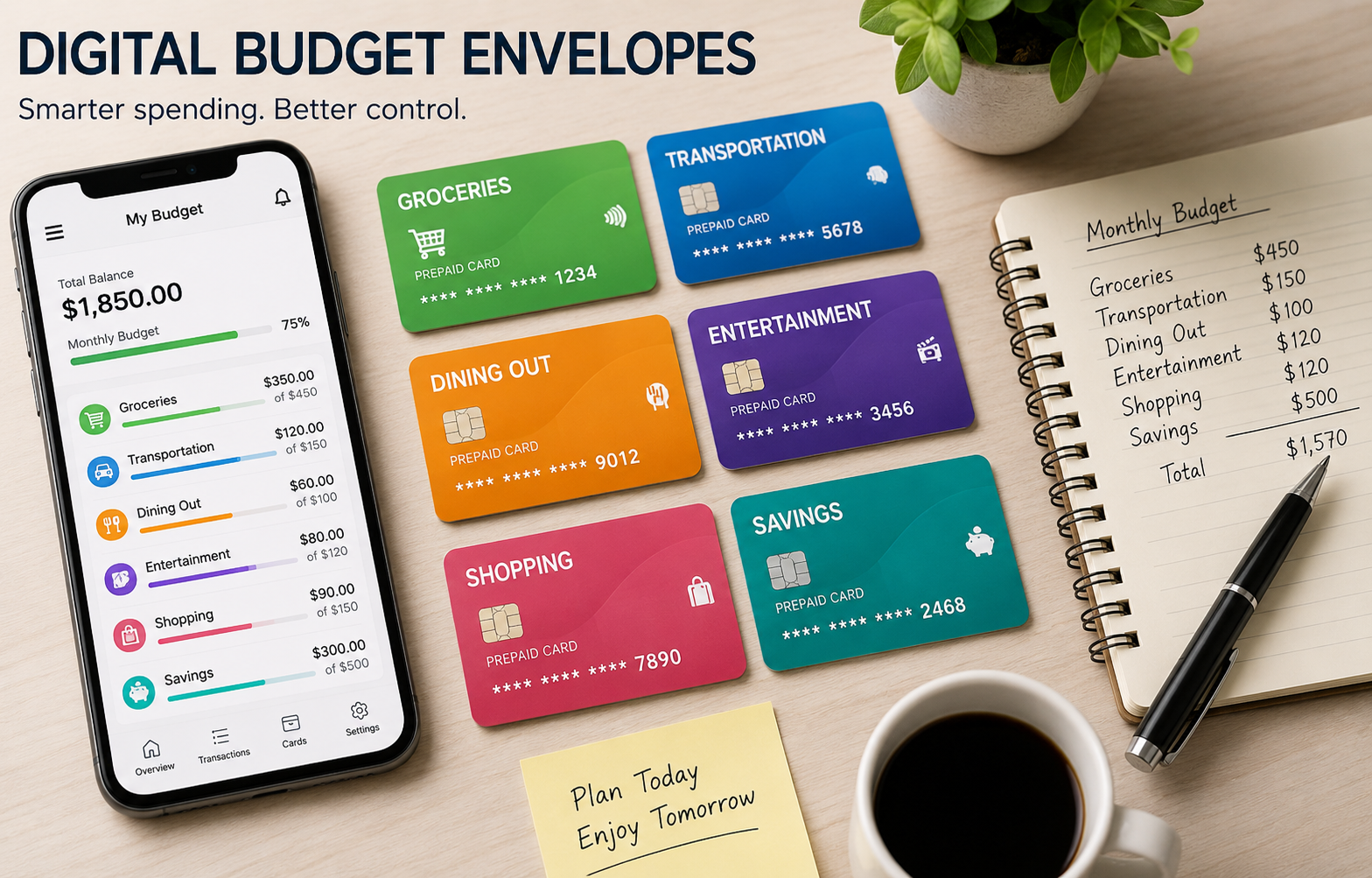
Managing personal finances has changed dramatically over the past decade. As cash becomes less common and digital payments dominate everyday purchases, many people are searching for new ways to stay disciplined with their money. Surprisingly, one of the oldest budgeting techniques—the envelope method—is making a comeback, but with a modern twist.
Instead of placing cash into physical envelopes labeled “Groceries,” “Fuel,” or “Entertainment,” consumers are now recreating the same budgeting system using prepaid cards. This digital evolution combines the proven psychology of spending limits with the convenience of electronic payments.
Why the traditional envelope method worked
The envelope budgeting system has been recommended by financial planners for generations. The concept was simple: allocate a fixed amount of money to different spending categories and stop spending once an envelope was empty.
This approach encouraged better financial habits because it:
- Created clear spending limits
- Prevented overspending
- Made budgeting easy to understand
- Increased awareness of daily expenses
- Reduced reliance on credit
While effective, carrying multiple cash envelopes no longer fits the way most people shop today.
The digital version solves modern problems
Today’s consumers rarely pay with cash. Groceries, streaming subscriptions, ride-sharing services, and online shopping all rely on digital payments. Prepaid cards make it possible to recreate the envelope system without giving up the convenience of card payments. Instead of cash envelopes, users assign separate prepaid balances to specific spending goals.
Examples include:
- Grocery budget
- Dining out
- Entertainment
- Transportation
- Shopping
- Holiday savings
Each category has its own available balance, making spending limits visible throughout the month.
Spending becomes easier to control
One of the biggest advantages of prepaid budgeting is psychological. People often spend differently when they know a category has a fixed limit. Rather than wondering whether there is enough money left for discretionary purchases, the remaining prepaid balance provides an immediate answer. This creates natural decision-making moments before every purchase.
Budget categories become more flexible
Unlike traditional envelopes, digital prepaid budgeting can easily adapt to changing priorities. Consumers can adjust category balances for:
- Seasonal expenses
- Travel
- School supplies
- Holiday shopping
- Home improvements
- Special events
Because the system is digital, changes can often be made quickly without reorganizing physical cash.
Families are adopting shared budgeting systems
Households are increasingly using prepaid budgeting strategies to coordinate shared expenses. Parents may allocate dedicated spending balances for:
- School lunches
- Children’s activities
- Household groceries
- Fuel expenses
- Weekly allowances
Each family member understands their available budget without constantly checking a shared bank account.
Digital budgeting reduces impulse purchases
Impulse spending remains one of the biggest challenges in personal finance. When discretionary purchases come from a limited prepaid balance, shoppers naturally become more selective. The available funds create a visible spending boundary that encourages better purchasing decisions. This simple limitation often proves more effective than relying on willpower alone.
Financial apps make tracking effortless
Modern prepaid platforms typically include budgeting features that complement the digital envelope approach. Many users can monitor:
- Remaining balances
- Transaction history
- Spending categories
- Monthly trends
- Budget progress
- Reload activity
These insights provide a clearer picture of spending habits than traditional cash budgeting ever could.
Younger consumers appreciate simplicity
Many younger adults prefer financial tools that require minimal setup while providing immediate feedback. Digital budget envelopes fit naturally into this expectation by combining:
- Mobile payments
- Real-time balance updates
- Easy budgeting
- Spending visibility
- Flexible money management
Instead of complicated spreadsheets, users receive practical spending guidance through everyday transactions.
Businesses are noticing the trend
Financial technology providers continue expanding prepaid products designed around budgeting rather than simple payments.
Many newer solutions emphasize:
- Category-based spending
- Automated funding
- Mobile wallet integration
- Instant balance updates
- Financial education features
This shift reflects growing demand for payment tools that actively support better financial habits.
The future of digital budgeting
As digital payments continue replacing cash, budgeting methods will likely become even more integrated into payment experiences. Artificial intelligence may eventually recommend spending adjustments, automate category funding, and identify opportunities to save without requiring manual budgeting. However, the underlying principle remains unchanged: separating money into dedicated purposes helps people spend more intentionally.
Final thoughts
Digital budget envelopes demonstrate how traditional financial wisdom can evolve alongside modern technology. By combining prepaid cards with structured spending categories, consumers gain greater visibility, stronger discipline, and improved control over everyday expenses without sacrificing the convenience of cashless payments.
As personal finance continues moving toward smarter digital tools, this updated version of the classic envelope method is proving that some of the best budgeting ideas never truly disappear—they simply adapt to the way people live today.