
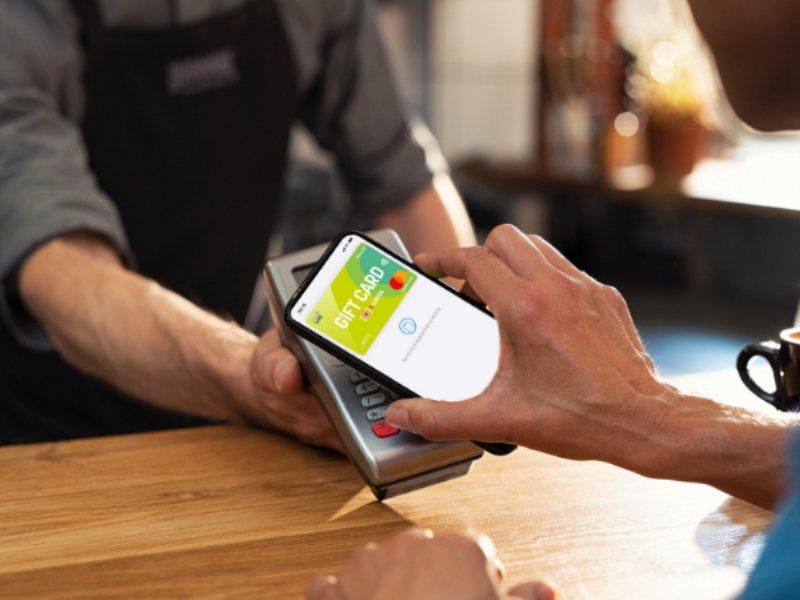
A gift card used to be easy to recognise. It was a piece of plastic tucked inside a birthday card, hanging from a supermarket display or sitting forgotten in a kitchen drawer with an uncertain balance. Digital versions changed the delivery method, but for years they often remained little more than card numbers and security codes sent by email.
That distinction is beginning to disappear. More prepaid gift products can now live inside the same mobile wallets consumers already use for ordinary debit and credit cards, allowing a gifted balance to move from an email or physical card directly into everyday contactless payments. Recent products such as Prezzee’s Mastercard Digital Gift Card make that transition particularly visible: there is no plastic card at all, and the recipient manages the prepaid value through a phone.
For consumers, this is more than a cosmetic upgrade. Moving gift value into a wallet changes where a card can be kept, how quickly it can be accessed and, potentially, how likely the balance is to be used rather than forgotten.
A Gift Card No Longer Needs to Look Like a Gift Card
Physical gift cards were designed around a simple retail model. Someone bought a fixed amount, handed over the card and the recipient presented it when they wanted to spend the balance. Open-loop prepaid cards expanded that idea by allowing spending across many merchants rather than at a single retailer, but the plastic remained familiar.
Mobile wallets separate the payment credential from that physical object. Once an eligible prepaid card is provisioned to a wallet, the phone becomes the practical payment interface. The customer does not necessarily need to retrieve the original card every time a purchase is made.
That creates an interesting shift in behaviour. A $50 prepaid balance sitting beside a consumer’s normal debit and credit cards can become part of routine spending instead of being reserved for a special online purchase. Coffee, groceries or another everyday transaction can potentially use the same tap-to-pay behaviour the customer already understands. The gift card has not turned into a bank account. It remains a prepaid product with its own balance, terms and limitations. What changes is the way the consumer interacts with it.
What Actually Changes When a Gift Card Enters a Wallet?
Adding a compatible prepaid card to a digital wallet does not increase its value or remove its underlying restrictions. The most important change is the payment interface. Instead of manually entering a long card number during every online purchase or carrying another piece of plastic, the user can access an eligible card through a wallet on a supported device. Depending on the product and merchant, that may allow contactless payments in stores as well as streamlined checkout online or inside apps.
| Feature | Traditional physical gift card | Wallet-ready digital gift card |
|---|---|---|
| Where it is stored | Physical wallet, drawer or purse | Mobile device |
| In-store payment | Swipe, insert or sometimes tap | Phone or compatible wearable |
| Online use | Card details entered manually | Wallet checkout where supported |
| Physical card required | Usually yes | Not necessarily |
| Balance remains prepaid | Yes | Yes |
| Merchant restrictions can still apply | Yes | Yes |
This distinction is important because “in a digital wallet” does not mean “works everywhere.” The underlying prepaid card still has an issuer, payment network, available balance and cardholder terms. A wallet changes how the credential is presented; it does not rewrite the rules attached to the account.
Digital Delivery Solves an Old Gift-Card Problem
One of the persistent weaknesses of physical gift cards has nothing to do with payment technology: people lose them or forget they have them. A small remaining balance can sit unused because checking the card feels inconvenient or because the recipient no longer remembers where the plastic is. Email-based gift cards improved the situation but introduced another place for value to disappear. A gift email can be buried beneath hundreds of later messages even though the money technically remains available.
Wallet storage gives the balance a more familiar home. Consumers already open Apple Pay, Google Pay and similar services to access everyday payment methods, tickets and passes. Putting prepaid value in the same environment can reduce the gap between receiving a gift and actually spending it.
That does not eliminate forgotten balances entirely. Users still need to understand which card they are selecting, and balance visibility varies between products. Nevertheless, making a gift card accessible through a device people already carry every day removes one practical reason for leaving it unused.
Wallet Support Does Not Make Every Purchase Simple
The convenience of mobile wallets can create the impression that a prepaid card will behave exactly like a debit card. Consumers should not assume that. Prepaid cards generally cannot spend more than their available value. That sounds obvious, but it matters when the final transaction amount is uncertain. Restaurants, hotels, fuel stations and some other merchants can request an authorization amount above the immediate purchase price or place temporary holds against the balance.
For example, a prepaid card with $40 remaining may still be declined for a transaction that ultimately costs less than $40 if the merchant initially requests a larger authorization. Moving the card into a mobile wallet does not remove that process because the merchant and issuer are still handling a prepaid payment underneath the wallet interface.
Consumers using wallet-ready gift cards should therefore keep a few habits:
- know the available balance before a larger purchase;
- remember that temporary authorization holds may reduce usable funds;
- check whether the merchant accepts split payments before relying on a small remaining balance;
- keep access to the original card information or account details when required;
- and review the specific issuer’s terms rather than assuming every prepaid card works identically.
The technology makes presenting the card easier. It does not make the economics of prepaid payments disappear.
Tokenisation Changes What the Merchant Receives
There is another difference happening behind the screen. Modern digital wallets commonly use tokenisation rather than repeatedly exposing the original payment-card number during transactions.
In simplified terms, a digital token can stand in for the underlying card credential. The wallet, payment network and issuer know how that token relates to the actual account, while the merchant can process an authorised payment without needing the original number in the same way it would during a traditional manual card entry.
For consumers, most of this infrastructure is invisible. They tap a phone, authenticate when required and see a payment confirmation. Yet tokenisation is one reason payment companies are increasingly comfortable moving more types of credentials into wallet environments.
It also explains why removing a prepaid card from a wallet and attempting to add it again may not always behave as expected. Wallet provisioning is not simply a photograph of the physical card stored on a phone. A separate digital relationship is being created between the card, device and payment system, and individual issuers can impose their own rules on that relationship.
Physical Gift Cards Are Unlikely to Vanish
The move towards wallet-based prepaid products does not mean the supermarket gift-card rack is about to disappear. Physical cards still solve several problems that digital products do not.
They are easy to hand to someone in person, require no knowledge of the recipient’s preferred device and provide a tangible object to unwrap. They also remain useful for customers who do not use mobile wallets or who simply prefer a physical payment method.
Digital cards have different strengths. They can be delivered almost immediately, avoid shipping and can fit naturally into online gifting or employee-reward programmes. Wallet compatibility then extends that convenience beyond delivery by making the balance usable in physical stores without producing another piece of plastic.
The likely future is therefore not physical versus digital. It is a market where the distinction becomes less important. A physical card may gain a digital-wallet version, while a card issued entirely online can still be spent at a physical checkout.
The Bigger Change Is Where Prepaid Value Lives
Digital wallets were initially treated as replacements for the physical wallet: put the same bank cards on a phone and tap instead of swiping. Their role is becoming broader. They are increasingly places where different forms of payment value can be stored and accessed through one interface.
Gift cards fit naturally into that development. A prepaid balance does not need its own separate physical object if a secure digital credential can represent it at checkout. The consumer still has to manage the balance and understand the card’s restrictions, but the act of spending becomes much closer to using any other wallet-based payment method.
That may ultimately be the most important change. Gift cards are not becoming ordinary debit cards, and moving them onto a phone does not remove the rules that make them prepaid products. Instead, they are becoming less isolated from the rest of a consumer’s payment life.
The old question was whether someone remembered to bring the gift card. Increasingly, the more relevant question will be whether that prepaid balance is already sitting beside their everyday cards in the wallet they use every day.