
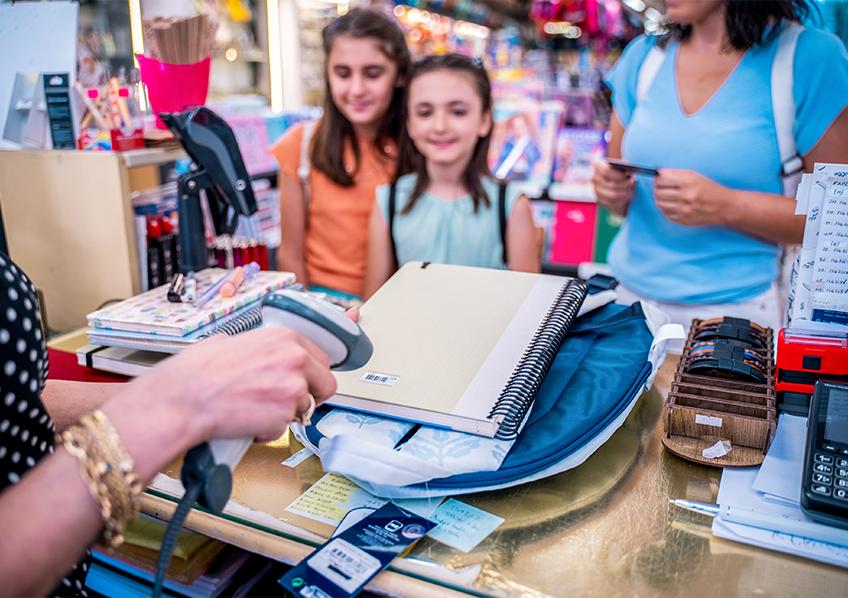
Back-to-school shopping often looks manageable until all the smaller purchases begin adding up. Notebooks, pens, folders, art materials, a calculator and a replacement backpack may each seem like ordinary expenses, but together they can turn into a significant seasonal bill. When those purchases are mixed with groceries, transport and other household spending, it also becomes harder to see how much the school list actually cost.
A prepaid card can provide a simple way to separate that spending from the rest of a household budget. Instead of treating every purchase as part of the main account balance, a fixed amount can be allocated specifically for school supplies. The card does not make those products cheaper, but it can make the spending boundary easier to see while shopping.
School Supply Costs Rarely Arrive as One Purchase
Back-to-school spending is usually spread across several stores and several days. A family might buy notebooks and stationery during one trip, order a calculator online later and discover after school starts that another folder, sports item or art supply is still needed.
That makes the final cost surprisingly difficult to estimate from memory. Even when every individual purchase is reasonable, the combined amount can move beyond the original plan.
A separate prepaid balance can make those purchases easier to group mentally. If $250 has been allocated for supplies, every eligible purchase comes from the same defined pool instead of disappearing among unrelated household transactions.
Start With the School List Before Setting the Budget
Loading a card first and deciding what to buy afterward can create an arbitrary limit. A better starting point is the actual list of expected purchases. School-provided supply lists are useful because they reveal which expenses are essential and which can be evaluated separately. Existing items at home can also be checked before replacements are added automatically.
A basic planning list might include:
- notebooks and paper;
- pens, pencils and markers;
- folders and binders;
- calculator or geometry tools;
- art materials;
- lunch accessories;
- backpack or school bag;
- classroom-specific supplies.
Once the likely items are visible, the budget can be based on realistic needs rather than a rough guess.
A Fixed Balance Creates a Visible Spending Boundary
One of the useful characteristics of prepaid budgeting is that the available amount can be separated from the household’s broader spending money. Suppose the planned school-supply budget is $300. Allocating that amount to a prepaid card creates a simple reference point. After $80 has been spent, approximately $220 remains for the rest of the list.
That is different from using a general-purpose payment card connected to a much larger balance. The purchase may still be affordable, but the user has to remember how much of the total account balance was supposed to be reserved for school expenses. A dedicated balance makes the category more visible during the shopping process.
Break the Budget Into Smaller Categories
Not every school purchase deserves the same share of the budget. Basic stationery may involve many inexpensive products, while one calculator or backpack can consume a much larger amount at once.
Dividing the total before shopping can prevent one category from absorbing money intended for another.
| Category | Example planned amount |
|---|---|
| Notebooks and paper | $45 |
| Pens and stationery | $35 |
| Folders and organization | $30 |
| Calculator and study tools | $60 |
| Art or project supplies | $40 |
| Backpack and accessories | $65 |
| Reserve for forgotten items | $25 |
| Total | $300 |
The exact numbers will vary between students and schools. The useful part is the structure: expensive items become visible before they compete with dozens of smaller purchases.
A Reserve Can Handle the Items That Appear Later
Completing the initial shopping trip does not always mean the spending is finished. Teachers may request additional materials during the first week, a notebook format may need to be changed or an older item may turn out to be unusable. Spending the entire budget before school begins leaves no room for those adjustments.
Keeping a small reserve can make the plan more flexible. Instead of treating unused money as permission for extra purchases, part of the balance can remain untouched until the first few weeks have passed. This is particularly useful for categories where requirements are not completely clear in advance.
Prepaid Cards Can Separate Seasonal Spending From Everyday Costs
Back-to-school expenses arrive at the same time as ordinary household bills. Food, fuel, transport, utilities and other recurring costs do not disappear simply because a new school year is starting.
When all of those transactions use the same payment method, reviewing the month later can be messy. A supermarket transaction might contain groceries and stationery together, while several online orders can make the school total even harder to reconstruct.
Using a separate payment source for planned school supplies can create a cleaner boundary. The remaining balance provides a quick indication of how much of the allocated amount is still available. That can be useful even when detailed expense tracking is not the goal.
Online and In-Store Shopping Need the Same Budget
School supplies are increasingly purchased across multiple channels. Some items may be cheaper or easier to find online, while others are more practical to inspect in a physical store. The danger is treating online purchases as a separate spending stream.
A $35 online order and a $70 store visit still belong to the same school-supply budget. Using one dedicated balance across supported purchases can help maintain that connection.
The key is to count the cost when the purchase is made rather than waiting until all orders have arrived. Otherwise several pending deliveries can make the remaining budget appear larger than it really is.
Comparing Prices Matters More on Expensive Items
Saving a small amount on pencils is useful, but larger items usually have a greater influence on the final total. A calculator priced at $80 instead of $55 changes the budget by $25 in a single decision. The same applies to backpacks, lunch bags, specialized art materials and other higher-cost products. That makes price comparison particularly useful before those purchases are made.
A simple approach is to divide items into three groups:
- Low-cost essentials that can be purchased quickly when prices are reasonable.
- Higher-cost essentials worth comparing across several retailers.
- Optional upgrades that should wait until the required list is covered.
This prevents excessive comparison work on tiny purchases while keeping attention on the items most capable of changing the overall budget.
Sales Are Useful Only When the Product Was Needed
Back-to-school promotions can create pressure to buy larger quantities because the unit price looks attractive. A multipack of notebooks or pens may genuinely save money if those products will be used, but the discount becomes less valuable when half of the package remains unnecessary. A defined spending limit changes how promotions can be evaluated.
Instead of asking only whether an item is discounted, the shopper can ask whether it belongs on the list and whether buying it leaves enough money for the remaining essentials. The sale becomes one factor in the decision rather than the reason for the purchase. That distinction helps keep promotional shopping connected to the original school plan.
Receipts Still Matter
A prepaid balance shows how much money remains, but it does not explain why every purchase was made. Receipts remain useful for returns, warranty claims and reviewing the budget afterward.
Keeping receipts can be especially important for electronics, calculators and higher-cost school accessories. If the wrong model was purchased or a teacher later specifies a different requirement, the ability to exchange the item can prevent an unnecessary second expense.
Digital receipts can make this easier when several purchases happen online. Physical receipts can be kept together until the school-supply period is finished. The card and the receipts serve different purposes: one controls the available spending pool, while the other documents individual purchases.
Mixed Purchases Need Extra Attention
A practical complication appears when school supplies are purchased during a normal household shopping trip. A retailer may sell groceries, cleaning products, stationery and school accessories in the same store. Paying for the entire basket with the school-supply card would blur the category boundary, while paying from the household account can make the school items disappear from the dedicated budget.
Separating the transactions at checkout is one option when convenient. Another is to record the school portion immediately and adjust the plan accordingly. The objective is not perfect accounting. It is avoiding a situation where the same school budget is effectively spent twice because some purchases were forgotten.
Let Older Children Participate in the Budget
For older students, school-supply shopping can also become a practical budgeting exercise. A teenager may have preferences about notebooks, stationery, backpack styles or accessories, but those preferences can be considered within a fixed total. Showing the available amount creates a concrete trade-off.
Choosing a more expensive backpack may mean reducing spending elsewhere. Selecting a lower-cost alternative can preserve money for other items. Those decisions are easier to understand when the budget is visible rather than presented as an abstract instruction to “spend less.” The parent can still control the overall plan while allowing the student to participate in smaller choices.
Do Not Forget Fees and Delivery Costs
An online price is not always the final cost of obtaining an item. Shipping fees can make a low-priced product more expensive than a local alternative, particularly when several small orders are placed separately. Before committing to an online purchase, it can help to compare the full checkout total rather than the listed item price.
This is another reason to plan several purchases together. Combining eligible items into one order may reduce delivery costs, while buying a single inexpensive product from a distant retailer can erase the apparent saving. The budget should reflect what leaves the card balance, not just the advertised shelf price.
Review the Budget After the Shopping Period
Once the school year has started and the immediate supply requests have slowed down, the remaining balance and receipts can provide useful information for the next year.
The review does not need to become a detailed spreadsheet. A few questions can reveal enough:
- Which categories cost more than expected?
- Which items were bought but barely used?
- Were expensive products replaced unnecessarily?
- Did last-minute requests require much of the reserve?
- Which items could be reused next year?
- Were online or local purchases generally better value?
Those answers can make the following year’s starting budget more realistic. A household that expected to spend $300 but consistently needs closer to $380 can plan for that difference earlier rather than discovering it during the shopping period.
Reusing Supplies Can Reduce the Next Budget
Not everything needs to be replaced at the beginning of a new school year. Calculators, rulers, pencil cases, backpacks, art tools and partially used stationery may remain perfectly usable.
Checking existing supplies before shopping has two benefits. It reduces unnecessary spending immediately and gives a clearer picture of what the new budget actually needs to cover.
This can also change where the available money is used. If the existing backpack remains in good condition, the amount originally reserved for a replacement can stay in the budget as a reserve or reduce the total allocation. The easiest saving is often the item that does not need to be purchased at all.
The Goal Is Control, Not Spending the Entire Balance
A school-supply budget is a ceiling, not a target. If everything required has been purchased and money remains, there is no reason to search for additional products simply because the funds were allocated for the category. The unused amount represents a successful outcome, not unfinished shopping.
This mindset matters because seasonal retail periods are designed around urgency. Promotions, displays and limited-time offers can make additional purchases feel connected to preparation even when the essential list is already complete. Keeping the original list visible helps distinguish between something still needed and something merely available.
A Separate Budget Can Make Back-to-School Shopping Easier to Read
School supplies are not usually one large expense. They are a collection of smaller decisions made across several stores, websites and weeks. That fragmented pattern is exactly what can make the final total difficult to control.
A prepaid card can provide a defined spending pool for those purchases. Combined with a realistic list, category limits, a small reserve and regular balance checks, it can make the seasonal budget easier to follow without turning every notebook or pen into a complicated financial decision.
The useful part is not the payment method by itself. It is the boundary created around a specific purpose. When the school list has been completed, the household can see what was spent, what remains and what might be planned differently next year.