
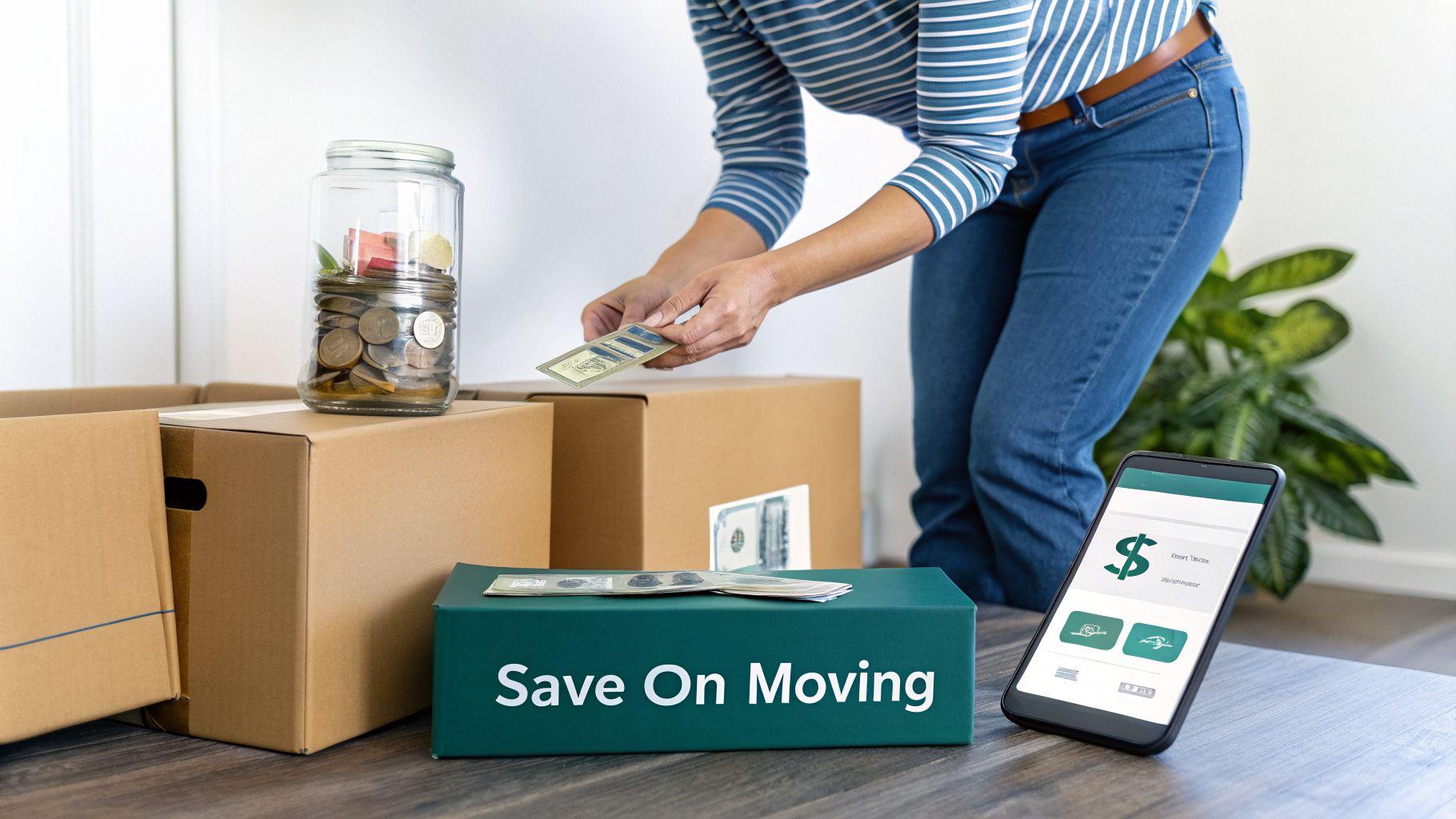
Moving has a habit of creating expenses that do not fit neatly into an ordinary monthly budget. Boxes and packing tape are only the beginning. Transport, cleaning supplies, temporary storage, replacement household items and small purchases for the new home can arrive within the same few weeks, often mixed together with normal spending on groceries, fuel and subscriptions.
That concentration of temporary costs makes relocation surprisingly difficult to track. A person may know how much the moving company costs but have a much weaker idea of how much disappears through dozens of smaller purchases before and after moving day. Prepaid cards offer one way to separate this short-term spending from the rest of the household budget without opening another traditional bank account.
Moving costs rarely arrive as one large bill
Planning a move often begins with the obvious expenses. Someone gets a quote for a moving truck, calculates a storage fee or estimates the cost of travelling to the new home. Those figures create the initial budget, but they rarely represent the final amount spent.
Smaller purchases accumulate quickly. Extra boxes are needed at the last minute, a roll of tape runs out, food gets ordered because the kitchen has already been packed and cleaning products are purchased for both the old and new property. After arriving, another wave of spending begins as people discover that they need extension cords, light bulbs, basic tools, storage containers or other inexpensive household items.
Individually, these transactions may not look significant. Together, they can push relocation spending far beyond the original estimate. Keeping them attached to a dedicated pool of money makes the total easier to see while the move is still happening.
A separate balance can create a practical moving budget
One advantage of prepaid spending is that a specific amount can be separated for the move. Instead of allowing relocation purchases to blend into the main current account, a user can work from a dedicated prepaid balance and see how much of that amount remains.
Suppose a household sets aside $1,200 for smaller moving expenses after paying the major fixed costs. Loading that amount onto a prepaid card creates a visible boundary around the budget. A $70 purchase of packing materials or a $45 hardware-store visit reduces the same balance, making the remaining amount immediately relevant to the next decision.
This is different from simply recording expenses later in a spreadsheet. The budget exists while purchases are being made, which can influence spending before the money is gone. That can be particularly useful during the final days of a move, when convenience often starts winning over careful planning.
Prepaid cards can separate temporary spending from normal life
A relocation budget is temporary by nature. Most households do not buy moving boxes, rent vans or pay storage fees every month, so mixing those purchases with recurring expenses can make normal spending patterns harder to understand.
A dedicated card creates a straightforward separation. Groceries, utility bills and everyday purchases can continue through the usual account, while eligible relocation costs are paid from the moving balance. When reviewing transactions later, there is less need to remember whether a particular hardware-store purchase belonged to ordinary home maintenance or the relocation.
This separation can also make post-move budgeting easier. Once the relocation period ends, the household can look at its regular accounts without several weeks of unusual transactions distorting the picture of normal monthly spending.
The budget should include more than moving day
A useful relocation budget normally needs to cover three periods rather than one: preparation, moving day and settling in. Focusing only on transport can leave too little money for the purchases that appear immediately before and after the move.
| Stage | Typical spending |
|---|---|
| Before the move | Boxes, tape, labels, cleaning, storage |
| Moving day | Transport, fuel, meals, parking |
| Arrival | Cleaning supplies, basic household items |
| First few days | Hardware, replacement items, small furnishings |
| Setup period | Delivery fees, organization and miscellaneous supplies |
The exact categories vary considerably depending on the move. Someone relocating between furnished apartments may need very little equipment, while a household moving into an empty property can face a much longer list.
The point is not to predict every purchase. It is to leave enough room in the budget for the period around the move rather than assigning the entire balance to the largest known expense.
Small purchases are often where the budget drifts
Large moving expenses tend to receive attention because they are visible in advance. A $600 service quote is likely to be compared with alternatives and included in the plan. A $14 purchase made during a rushed trip to a store receives much less scrutiny.
The problem is repetition. Several $10–$40 transactions over two weeks can become a substantial part of the overall cost. Because they occur at different retailers and solve immediate problems, they are also easy to forget when estimating what the move actually cost.
Using a separate prepaid balance does not prevent these purchases, nor should it. Some last-minute spending is unavoidable. What it can do is make their cumulative effect easier to notice because every transaction reduces the same limited pool instead of disappearing among unrelated account activity.
Shared moves can benefit from one defined spending pool
Moving with a partner or family introduces another complication: several people may be buying things for the same relocation. One person picks up packing materials while another pays for cleaning supplies, and someone else orders food on moving day. Reconstructing the total afterward can become surprisingly tedious.
A defined moving budget provides a common reference point even when the actual payment arrangement varies. If a prepaid product permits the intended purchasing setup, it can help keep eligible expenses associated with the relocation rather than scattered across unrelated spending.
The important part is establishing rules before purchases begin. Households can decide what belongs to the moving budget and what remains an ordinary personal expense. A new shower curtain for the property might qualify, for example, while an unrelated clothing purchase during the same shopping trip would not. Without that distinction, a separate payment method quickly stops functioning as a meaningful budget.
Online purchases are part of modern relocation spending
Not every moving expense happens at a physical store. Packing supplies may be ordered online, storage can be reserved through a website and household essentials are often purchased before the person even reaches the new property.
Prepaid cards that support the relevant online transaction can therefore fit into the same budgeting approach. Instead of using the dedicated balance only for local purchases, the user can keep more relocation expenses connected to one spending pool.
There is still a practical reason to check payment requirements before relying on any prepaid card. Online merchants can have their own acceptance policies, and some transactions may involve authorization conditions that differ from a straightforward retail purchase. A moving budget works better when users know in advance which major expenses can actually be paid through their chosen method.
Deposits and authorization holds need extra attention
Some relocation-related purchases are less predictable than buying boxes at a store. Vehicle rentals, hotels and certain services may place authorization holds or have payment requirements that make a prepaid balance more complicated to manage.
A hold can temporarily reduce the amount available even when the final charge is lower. If most of the moving budget sits on one prepaid card, that temporary reduction could leave less money available for other purchases during an already busy day.
For that reason, prepaid cards are often easier to use for known purchases than as an assumed solution for every relocation expense. Checking the merchant’s payment and deposit requirements beforehand can prevent a situation where the user arrives expecting to use one payment method and discovers that different conditions apply. The dedicated budget can still be useful even if a few large services need another payment method. The goal is organization, not forcing every transaction onto a single card.
A reserve helps with the first week after arrival
Finishing the physical move does not necessarily mean the moving expenses have ended. The first few days in a new home tend to reveal missing items that were difficult to predict beforehand. A kitchen may need basic utensils that were discarded during packing. A different room layout may require another extension cable. Storage solutions that worked in the old property may no longer fit. These are rarely dramatic expenses, but they arrive when much of the original relocation budget may already have been spent.
Keeping part of the prepaid balance untouched for this period can be useful. Instead of treating the full amount as available before moving day, a household might deliberately reserve a portion for the first week after arrival.
For example:
- 25% for preparation and packing;
- 40% for moving-day and transport costs;
- 25% for initial household setup;
- 10% as an unplanned-expense reserve.
Those percentages are only an example. A local apartment move and a long-distance household relocation will naturally produce very different cost structures.
The remaining balance can act as a warning signal
A traditional spending report tells users what already happened. A limited prepaid balance can also provide information about what is still possible. If $800 was allocated to incidental moving costs and only $180 remains several days before the move, that figure immediately changes the context of the next purchase. The user does not need to calculate every transaction again to realize that the original budget is becoming tight.
This can encourage useful adjustments while there is still time to make them. Optional purchases can be delayed, additional supplies can be compared more carefully or money can be deliberately added to the budget after acknowledging that the original estimate was too low.
That last point matters. A budget should not pretend unavoidable expenses do not exist. Sometimes the realistic response is to increase the allocation, but doing so consciously is different from discovering weeks later that relocation spending quietly exceeded the plan.
Prepaid spending can simplify the post-move review
Once the boxes are unpacked, reviewing the dedicated transaction history can provide a clearer picture of what the relocation actually cost. This can be useful even if the household has no intention of moving again soon.
The review may show that packing supplies were inexpensive but convenience purchases became costly, or that the first week in the new home required much more money than expected. Those patterns can help when rebuilding savings after the move or planning other temporary household projects.
It can also expose forgotten recurring charges created during the relocation. A temporary service, storage arrangement or other payment may need attention after the move is complete. Reviewing the transactions provides a natural point to check whether every temporary expense has actually ended.
A moving budget works best when categories stay simple
There is little benefit in turning a short relocation into an accounting project. Creating fifteen categories and manually recording every roll of tape can make the budgeting system harder to maintain than the move itself.
A few broad categories are usually enough: preparation, transport, food, new-home setup and unexpected costs. The prepaid balance already provides the main boundary, while these categories simply help explain where the money went.
This lighter structure also makes the system easier to use during busy days. People moving furniture or coordinating deliveries are unlikely to spend much time maintaining a detailed financial spreadsheet. A useful budget needs to survive contact with the actual move.
The value comes from separating an unusual financial period
Prepaid cards are often discussed as alternatives for everyday purchases, online shopping or gifting, but temporary spending periods can be another practical use case. Moving is a good example because it creates a burst of unusual expenses that can easily become mixed with normal household finances.
A dedicated prepaid balance can give those costs their own boundary. It makes small purchases more visible, provides a clear remaining amount and creates a transaction history that is easier to review after the relocation is finished. At the same time, users still need to check card acceptance and merchant requirements, particularly for rentals, deposits and transactions involving authorization holds.
The useful part is not the card by itself. It is the separation it creates. During a move, when dozens of small decisions compete for attention, having one clearly defined pool for relocation spending can make an otherwise messy part of the budget considerably easier to follow.