
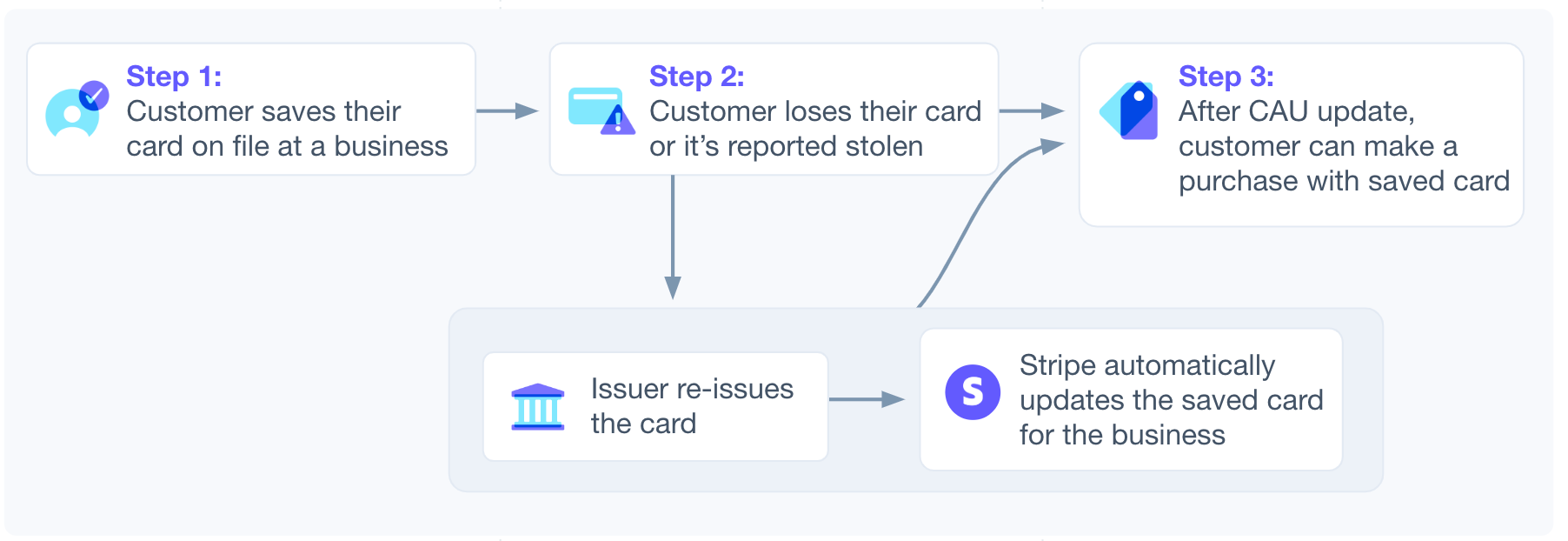
Saving a payment card has become a normal part of digital commerce. Consumers store cards with streaming platforms, marketplaces, delivery services, travel apps, utilities, and countless other online businesses because it makes future purchases faster.
The convenience creates a less visible problem, however. Cards expire, get replaced after fraud, or receive new account details. When a merchant continues using outdated information, a perfectly legitimate payment can fail even though the customer still wants the service. Card-on-file updating technology is helping businesses solve that problem without repeatedly asking customers to enter new payment details.
Why Stored Payment Credentials Become Outdated
A saved card is not permanent. Several everyday events can make stored credentials unusable:
- The physical card reaches its expiration date.
- A bank issues a replacement after loss or theft.
- The card number changes following suspected fraud.
- An account moves to a replacement product.
- Stored expiry information is no longer current.
For a one-time purchase, the customer can simply enter another card. Recurring and account-based payments are more complicated because the merchant may attempt the payment automatically. The first sign of a problem may therefore be a failed transaction rather than an intentional cancellation.
Failed Payments Are Not Always Lost Customers
Businesses sometimes treat every payment decline as evidence that a customer no longer wants to pay. That assumption can be expensive. A user may have subscribed months earlier and forgotten which card is stored. Another may have received a new card from their issuer without realizing that several online accounts still contain the old details.
This creates a distinction between voluntary and involuntary payment loss. A customer who actively cancels has made a decision. Someone whose payment fails because an old card expired may still want the product. Updating stored credentials helps businesses preserve that difference.
What Automatic Card Updating Does
Card updater services can pass refreshed account information through payment networks when an eligible card changes. The merchant does not necessarily need to ask the customer to open an account page and manually replace the old information.
Depending on the issuer, network, merchant setup, and transaction, updated information may allow future payments to continue using the refreshed credential. From the customer’s perspective, very little happens. That is the point. The best payment infrastructure often removes unnecessary actions rather than adding new ones.
Recurring Services Benefit Most
Subscription businesses are obvious users of card-on-file technology because they depend on repeated payments. Consider how many services now use recurring billing:
- Video and music streaming
- Software subscriptions
- Cloud storage
- Membership programs
- Online learning platforms
- Fitness services
- Delivery memberships
- Digital publications
A single expired credential can interrupt access even when the customer has no intention of leaving. Preventing those interruptions creates a better experience for both sides.
The Impact Goes Beyond Subscriptions
Stored credentials also matter in businesses where customers make irregular repeat purchases. A food delivery app, for example, may retain a preferred card even though purchases happen manually. The same applies to transportation apps, online marketplaces, gaming platforms, and travel services.
If a stored credential becomes invalid, the problem appears when the customer is trying to complete another purchase. That creates friction at exactly the wrong moment. Instead of checking out immediately, the user has to find a wallet, locate another card, update the account, and try again. Keeping eligible credentials current can remove several of those steps.
Convenience Must Still Be Transparent
Automatic updating does not eliminate the need for clear account information. Customers should still be able to see which payment method is associated with an account and change or remove it when necessary.
A well-designed payment settings page should make it easy to understand:
- Which card is stored
- Which card is used by default
- When a payment method expires
- How to replace the payment method
- How to delete saved credentials
- Which recurring services use that method
Automation works best when it reduces technical friction without taking meaningful control away from the user.
Digital Wallets Are Changing the Model Too
The growth of tokenized wallets adds another layer to stored payments. Instead of every merchant maintaining the same raw payment credential, tokenized systems can use alternative identifiers connected to the underlying account.
This can make credential management more flexible when cards change. The broader trend is clear: digital payments are moving away from treating card numbers as static information that must remain unchanged for years. Payment identity is becoming more dynamic.
Businesses Gain More Predictable Revenue
For merchants, the financial impact can be significant. When legitimate recurring payments fail, businesses often need to recover them through reminders, retries, customer support, or payment-update emails. Each additional recovery step costs time and creates another opportunity for the customer to abandon the process.
Improved credential continuity can help reduce:
- Avoidable payment declines
- Customer support requests
- Billing interruptions
- Manual payment updates
- Involuntary service cancellations
That does not mean every failed payment can or should be recovered. Insufficient funds, fraud controls, closed accounts, and customer cancellations remain separate issues. The benefit comes from removing failures caused purely by stale card information.
Payment Recovery Is Becoming More Intelligent
Credential updating increasingly operates alongside other payment optimization systems. A modern merchant may combine several tools:
| Payment Issue | Possible Response |
|---|---|
| Expired stored card | Credential update |
| Temporary issuer decline | Scheduled retry |
| Processor availability issue | Alternative routing |
| Authentication requirement | Customer verification |
| Closed account | Request another payment method |
The important development is that businesses no longer need to treat every decline in exactly the same way. Understanding why a payment failed allows the system to choose a more appropriate response.
Customers Notice Reliability More Than Infrastructure
Most shoppers will never know whether a payment network updated a stored credential behind the scenes. They will notice when a service suddenly stops working.
That makes payment continuity an unusual part of customer experience. Successful infrastructure often remains invisible, while failures become immediately noticeable. For online businesses, this changes the goal from simply processing transactions to maintaining reliable payment relationships over time.
Stored Payments Are Becoming Less Static
Card-on-file updating reflects a broader change in digital payments. Consumers expect accounts to remain usable even as the underlying financial details change. Merchants, meanwhile, want to reduce unnecessary interruptions without forcing customers through repeated checkout steps.
As payment networks become more connected, stored credentials are likely to behave less like fixed pieces of information and more like continuously maintained payment identities.
That shift can make recurring billing, repeat purchases, and account-based commerce considerably smoother. For users, the benefit is simple: fewer unexpected payment problems. For businesses, it means fewer legitimate transactions lost because a card changed somewhere along the way.