
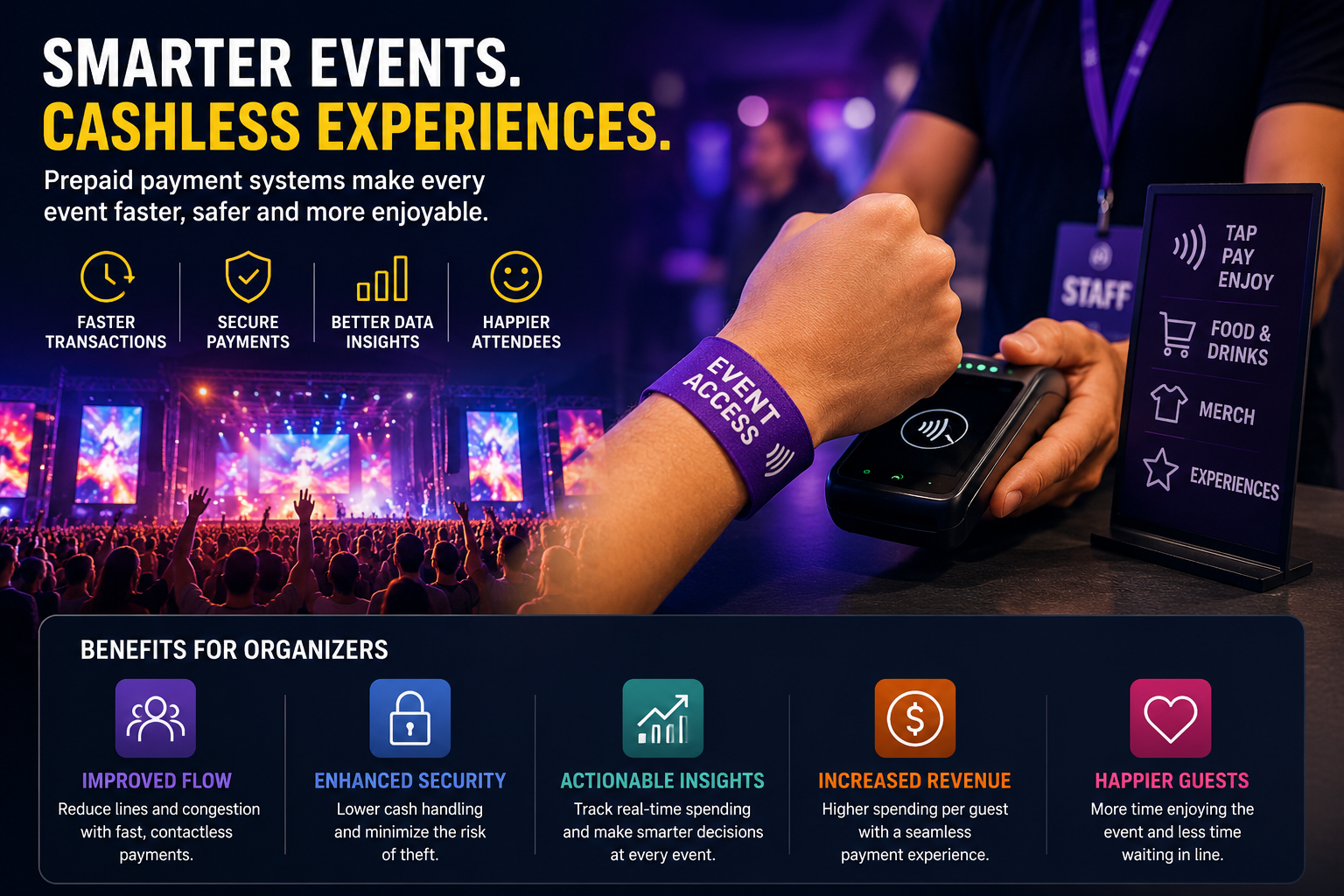
Large-scale events have changed dramatically over the last decade. Modern festivals, concerts, sporting events, and entertainment venues are no longer focused solely on attracting visitors. They are increasingly investing in technologies that improve the overall attendee experience while helping organizers manage operations more efficiently.
One trend gaining momentum across the event industry is the adoption of prepaid payment systems. From music festivals and stadiums to multi-day conventions, organizers are looking for ways to reduce cash handling, shorten queues, and simplify purchases throughout the venue. As a result, prepaid payment solutions are becoming an important part of how modern events operate.
Why Traditional Event Payments Create Challenges
Managing payments at large events has never been simple. Thousands of attendees often attempt to purchase food, drinks, merchandise, and other services simultaneously.
This can create several operational problems:
| Challenge | Impact |
|---|---|
| Long queues | Reduced customer satisfaction |
| Cash handling | Increased operational complexity |
| Slow transactions | Lost sales opportunities |
| Payment disputes | Additional staff workload |
| Security concerns | Greater risk of theft |
When event organizers are dealing with tens of thousands of visitors, even small inefficiencies can quickly become major issues.
How Prepaid Payment Systems Work at Events
Prepaid payment systems allow attendees to load funds before or during an event and use those balances for purchases throughout the venue.
Depending on the event, payments may be made through:
- Prepaid cards.
- RFID wristbands.
- Digital event passes.
- Mobile payment credentials.
- Reloadable event accounts.
Instead of repeatedly entering payment details or carrying cash, visitors can make purchases with a simple tap or scan. This streamlined process helps improve transaction speeds while creating a more convenient experience for attendees.
Faster Transactions Benefit Everyone
One of the biggest reasons organizers are embracing prepaid systems is speed. At busy venues, reducing transaction times by only a few seconds can significantly improve overall operations. Shorter queues mean visitors spend less time waiting and more time enjoying the event.
The benefits extend beyond convenience.
| Benefit | Result |
|---|---|
| Faster checkout | Higher transaction volume |
| Shorter lines | Better attendee satisfaction |
| Reduced congestion | Improved crowd management |
| Faster service | Increased vendor efficiency |
| Simplified payments | Better overall experience |
For event operators, these improvements can directly influence customer satisfaction and revenue generation.
Prepaid Systems Help Organizers Manage Spending Data
Another advantage of prepaid payment ecosystems is access to transaction insights.
Event organizers can better understand:
- Peak purchasing periods.
- Popular merchandise categories.
- Food and beverage demand.
- Visitor spending behavior.
- Vendor performance.
These insights help organizers make more informed decisions when planning future events. Rather than relying on estimates, operators can analyze actual transaction activity to improve staffing, inventory management, and venue layouts.
Music Festivals Are Leading Adoption
Music festivals have become some of the earliest adopters of prepaid event payments. Many large festivals now use cashless ecosystems that allow attendees to load funds before arrival. This approach minimizes the need for cash handling while creating a smoother visitor experience.
Several factors make festivals particularly suitable for prepaid systems:
| Festival Requirement | Payment Advantage |
|---|---|
| High visitor volume | Faster processing |
| Multiple vendors | Centralized payments |
| Multi-day attendance | Reloadable balances |
| Merchandise sales | Simplified purchases |
| Food and beverage demand | Reduced queues |
Because festivals often operate as temporary cities, efficient payment infrastructure has become increasingly important.
Stadiums and Sports Venues Are Following the Trend
The sports industry is also embracing prepaid payment technologies.
Modern stadiums are under pressure to improve fan experiences while serving large crowds within limited timeframes. Long queues during halftime or intermissions can negatively impact the overall event experience.
Prepaid systems help address these challenges by accelerating transactions at concession stands, merchandise stores, and hospitality areas. Many venues are also integrating prepaid options with ticketing systems, creating a more connected visitor experience from entry to purchase.
What the Future of Event Payments Could Look Like
The event industry continues to invest in digital infrastructure, and prepaid systems are likely to become even more sophisticated.
Future developments may include:
- Seamless ticket and payment integration.
- Personalized event spending accounts.
- Multi-event prepaid balances.
- Real-time spending notifications.
- Cross-venue payment ecosystems.
As consumers become increasingly comfortable with cashless experiences, demand for faster and more convenient payment methods is expected to grow.
Conclusion
Prepaid payment systems for events are becoming increasingly popular because they solve practical challenges for both organizers and attendees. By reducing queues, simplifying transactions, improving operational efficiency, and generating valuable spending insights, prepaid solutions offer benefits that extend far beyond simple payment processing.
As festivals, concerts, stadiums, and entertainment venues continue modernizing their operations, prepaid payment systems are likely to play an even bigger role in shaping the future of live events.